Most rehab budgets start too late. An investor finds a promising listing, guesses at repairs from a few photos, waits for a walkthrough, asks contractors for rough numbers, and only then realizes the deal never had enough spread.
An AI rehab cost estimator changes the first pass. Instead of treating photos as a vague condition check, InstantlyAnalyze's Rehab Coach uses them to build a prioritized scope of work, cost bands, visible condition notes, and before/after renovation renders so you can screen value-add deals faster.
Summary
Rehab Coach is built for real estate investors who need a fast, defensible first-pass renovation plan. It works best for BRRRR deals, flips, value-add rentals, and remote deal screening where the investor needs to understand condition, budget, and renovation sequence before spending time on a walkthrough. It is not a replacement for contractor bids or inspections; it is the faster decision layer before you decide whether a deal deserves that next step.
Why Rehab Budgets Break Deals
The rehab number controls almost every value-add investment decision:
- It changes your all-in basis.
- It changes your offer ceiling.
- It changes cash left in a BRRRR deal.
- It changes whether the refinance can work.
- It changes whether the rent-ready finish level is worth the spend.
That is why a casual "it needs paint and floors" estimate can be dangerous. Older homes can hide water intrusion, outdated wiring, roof issues, missing safety items, and deferred maintenance behind the obvious cosmetic work.
The expensive mistake is not just underestimating one line item. It is doing the work in the wrong order. Cosmetic upgrades do not matter if moisture, mold, roof leaks, or safety issues keep the property from becoming a durable rental.
What an AI Rehab Estimator Should Do
A useful AI rehab estimator should do more than produce one big repair number. Investors need the reasoning behind the budget.
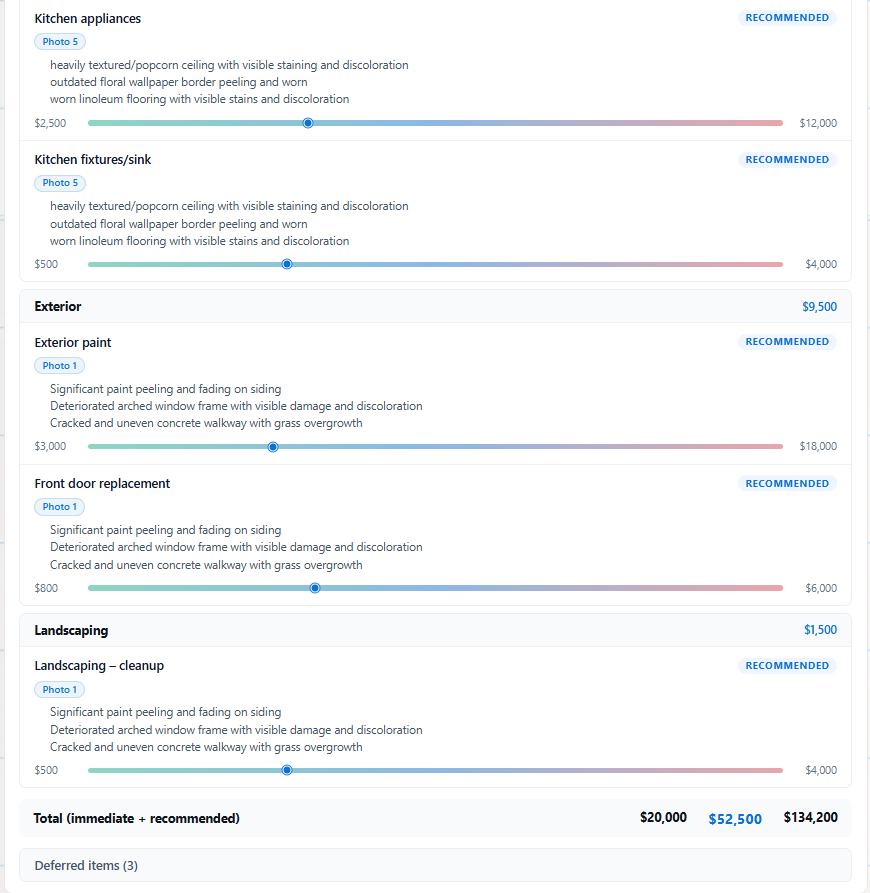
Rehab Coach focuses on five practical outputs:
- Photo-grounded condition analysis
- A line-item scope of work
- Low, Mid, and High cost bands
- Priority labels for immediate, recommended, and deferred work
- Coach notes that explain sequence, hidden risks, and tradeoffs
That structure matters because a rehab budget is a planning tool, not just a price tag. If the scope says mold remediation, drywall repair, and roof work are immediate, that tells you the project is not a simple cosmetic turn.
Built for Investor Use Cases
Rehab Coach is not trying to estimate a dream-home remodel. It is built around investor decisions.
BRRRR deals
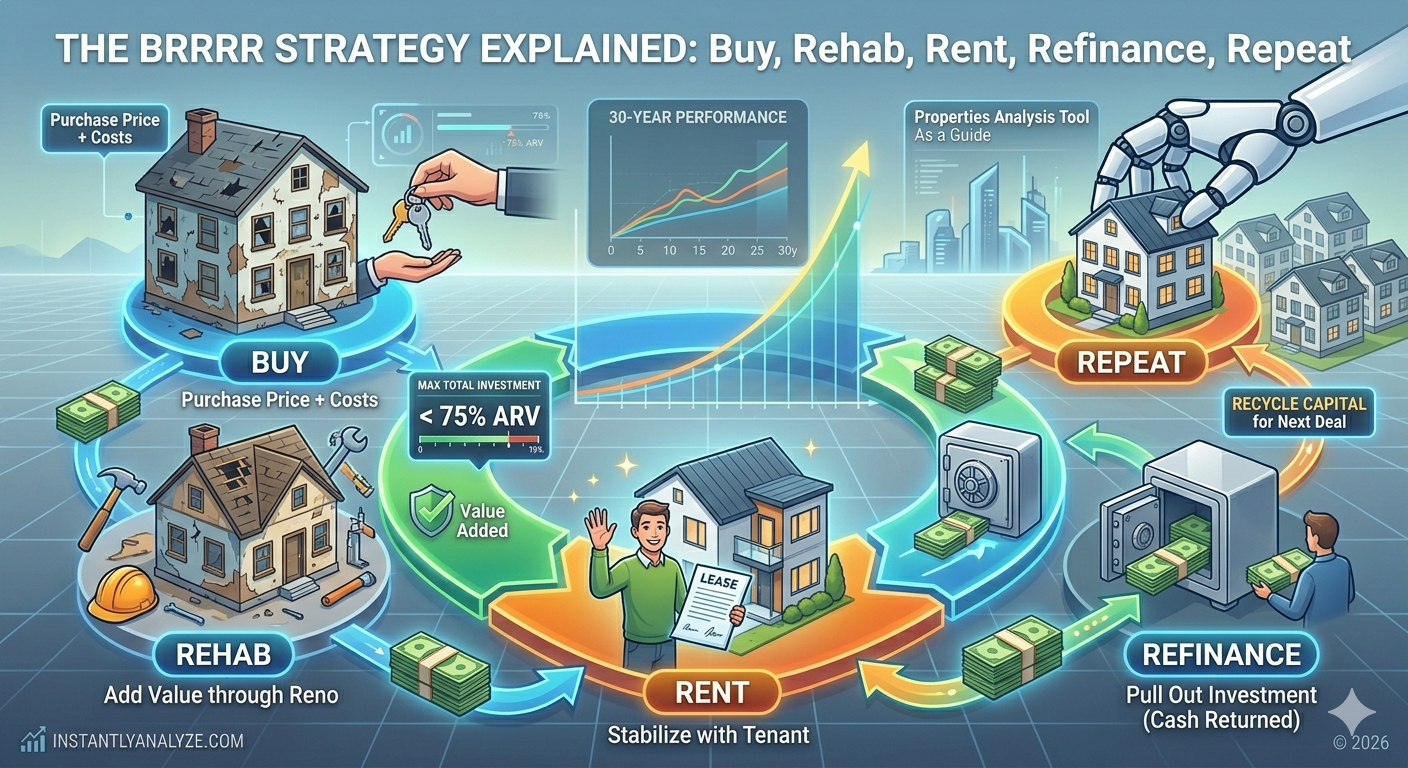
In a BRRRR strategy, the rehab budget affects both the cash invested up front and the refinance outcome later. A deal can fail if the renovation costs more than expected, if the finish level is too expensive for the rent, or if the post-rehab value does not support the refinance.
Use Rehab Coach to get an early scope before you spend time modeling every refinance detail.
Value-add rentals
For long-term rentals, the best rehab plan is usually disciplined. It prioritizes safety, habitability, durability, and rent appeal without over-improving for the neighborhood.
That is why inputs like "rent-ready turn, minimize spend" matter. They steer the plan toward investor-grade decisions instead of owner-occupant preferences.
Flips
Flips need a cleaner buyer-facing finish, but they still need sequence discipline. A resale refresh can justify more cosmetic work, but only after the major condition risks are understood.
Remote screening
Out-of-state investors often have to decide which properties deserve a showing, inspection, or contractor walkthrough before they can visit. Rehab Coach is useful in that early triage step because it can turn listing photos into a consistent first-pass scope.
How the Workflow Works
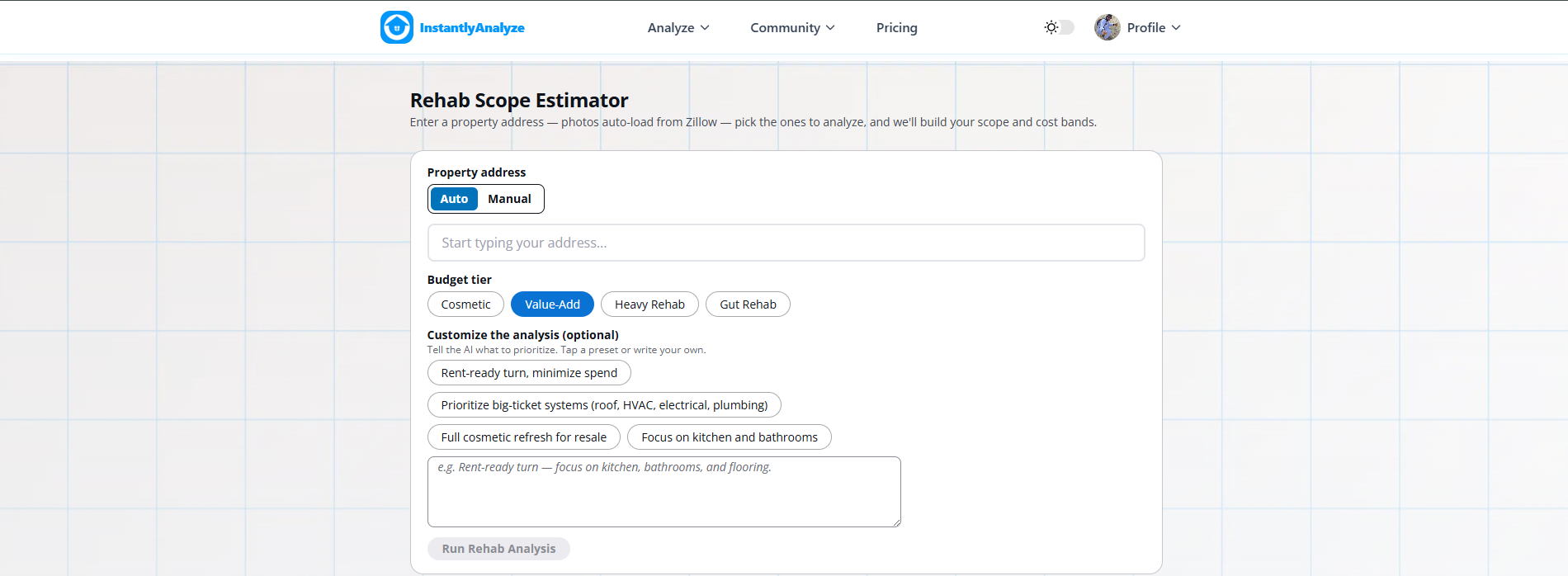
The workflow starts with an address and photos. Rehab Coach can auto-fetch listing photos when available, and you can select the images that best represent the property condition.
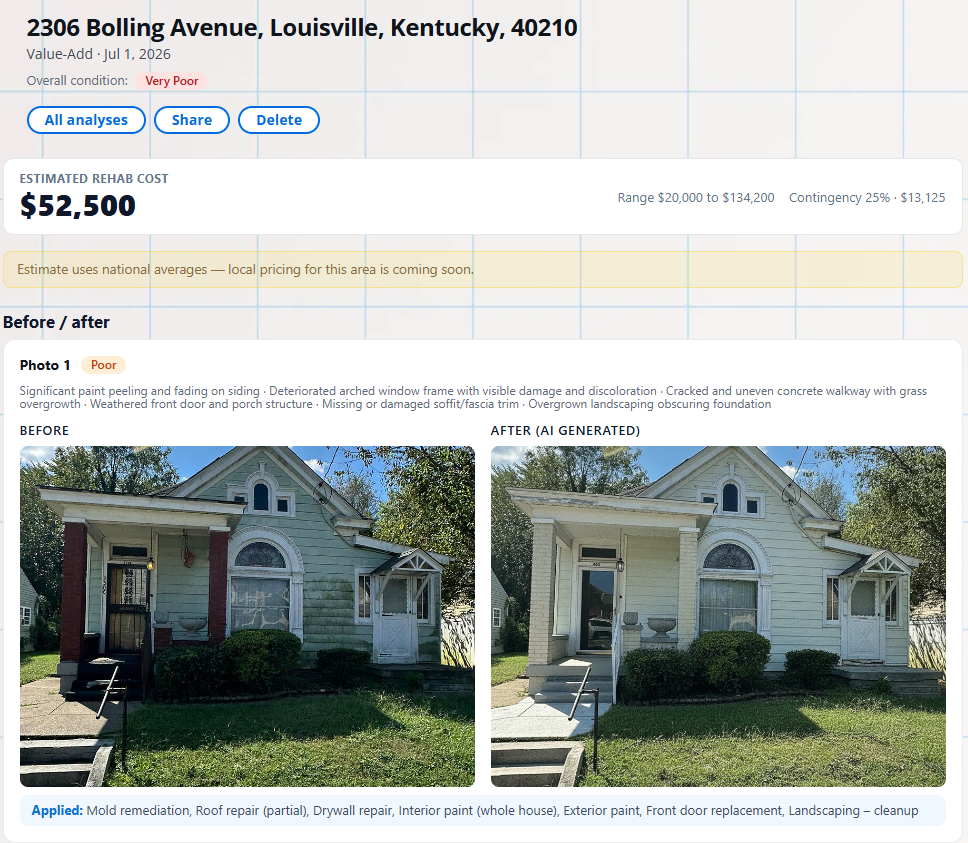
From there, the tool analyzes visible issues, maps them to scope categories, estimates cost bands, and generates before/after renovation views for selected photos.
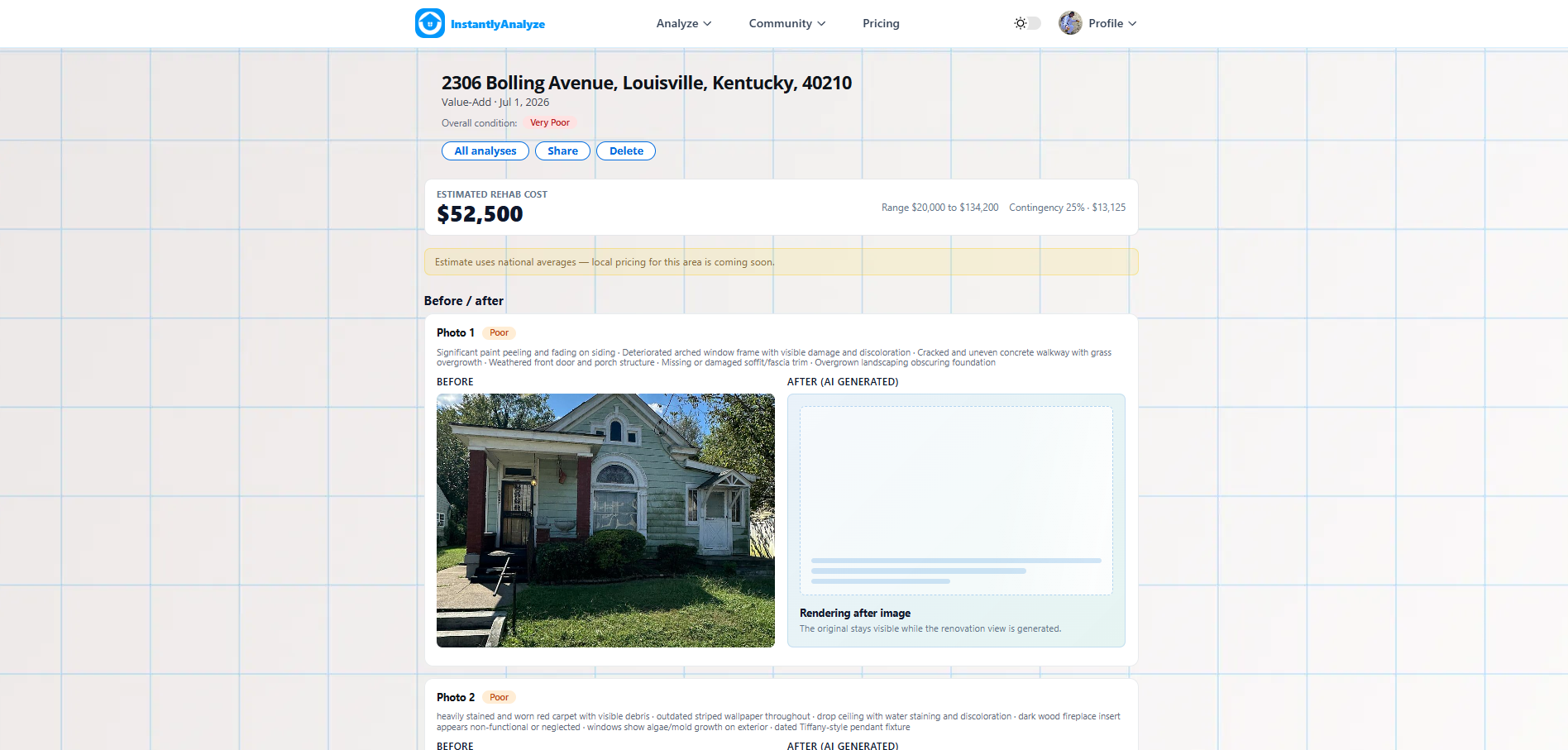
The important part is that the output stays tied to the photos. If a scope item is flagged from Photo 2 or Photo 4, you can see why it appeared in the plan instead of treating the estimate like a black box.
Free to use. No credit card needed. See cash flow, cap rate, and ROI in minutes.
Start Analyzing — FreeCoach Notes Add the Investor Judgment
Numbers are useful, but scope sequence is where many rehab plans succeed or fail.
Coach notes summarize the most important moves and the risks to watch before you rely on the estimate. In the example below, the tool does not treat mold, water staining, flooring, exterior paint, and old-home hazards as disconnected issues. It turns them into a sequence: stop the moisture story first, stabilize the property, then handle cosmetic work.
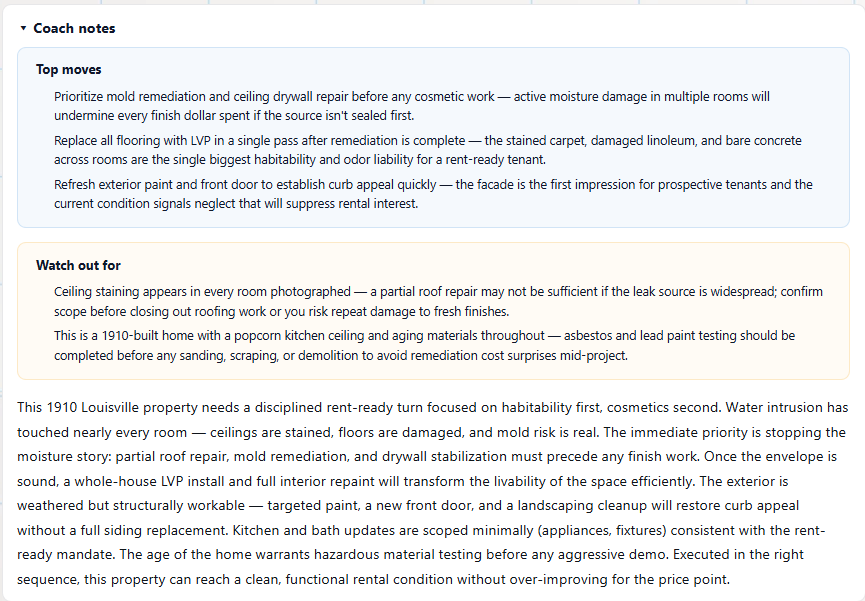
That is the kind of output an investor can use in a real conversation with a partner or contractor.
What the AI Cannot See
No photo-based rehab estimate can inspect behind walls, under floors, inside attics, or inside mechanical systems. A good estimator should say that clearly.
Rehab Coach includes a "What we could not see" section for risks that may require inspection, contractor verification, or additional contingency.
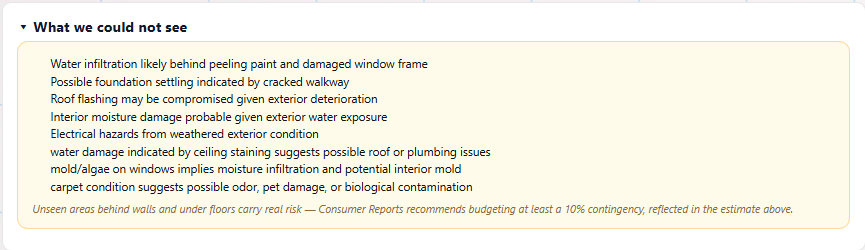
This is one of the most important parts of the workflow. The AI can help you move faster, but it should not encourage false certainty. Use the output to decide whether a deal deserves deeper diligence, then confirm major items before closing.
How to Use the Estimate in Your Deal Process
Use Rehab Coach as the early rehab planning layer:
- Screen the listing photos for condition and scope.
- Decide whether the property deserves a walkthrough.
- Use the cost bands to test your offer price.
- Pair the rehab number with a BRRRR calculator or rental analysis.
- Share the scope with contractors when you are ready for real bids.
The goal is not to make every deal look possible. The goal is to reject weak deals faster and spend more time on the few properties that deserve attention.
A Note on Active Development
Rehab Coach is available now, and it is moving quickly. Screenshots in this article reflect the July 2026 workflow, so the exact interface may change.
The direction is straightforward: stronger rehab plan creativity, better before/after renovation concepts, and easier sharing so investors can communicate the vision to contractors without exposing every internal estimate or underwriting assumption.
Bottom Line
An AI rehab cost estimator is most useful when it helps investors move from "this property looks rough" to "here is the likely scope, sequence, cost range, and next diligence step."
That is the lane for Rehab Coach. It turns listing photos into a more organized rehab plan so BRRRR, flip, and value-add rental investors can screen deals with less guesswork.