If you are new to real estate investing, one of the most confusing parts is that everyone seems to be talking about a different game. One investor is buying rentals for cash flow. Another is running BRRRR deals. Another is flipping. Another is chasing Airbnb revenue. Another is investing passively in syndications. They are all doing "real estate investing," but they are not solving the same problem.
That is why strategy matters so much. Before you underwrite a property, choose financing, or compare returns, you need to know what strategy you are actually trying to execute.
This guide is a beginner-friendly walkthrough of the full curated strategy list used inside InstantlyAnalyze. The goal is not to convince you that one strategy is best for everyone. The goal is to help you understand:
- what the main strategy families are
- which ones are active vs passive
- which are beginner-friendly vs advanced
- which are well supported by the current rental report workflow
- how to match a strategy to your time, capital, and risk tolerance
Simple rule: a good property can still be a bad deal if you are using the wrong strategy for your goals, capital, or skill set.
Start Here: The 5 Strategy Families Most New Investors Actually Use
Most beginners do not need to learn 30 strategies at once. In practice, the early decision usually comes down to a small set of active paths:
- Hold As-Is
Buy a property that already works as a rental, stabilize it, and hold it for cash flow and appreciation. - Value-Add
Buy a property that can improve with repairs, upgrades, better leasing, or better operations. - BRRRR
Buy, rehab, rent, refinance, and repeat to recycle capital. - Refinance Optimization
Keep the property, but improve debt structure or pull capital back out at the right time. - Sale / Exit
Improve or reposition the deal with a planned sale instead of a long-term hold.
Those five are the operational presets the report is built around because they are the ones most directly tied to residential rental underwriting.
The Full Strategy Map
The broader real estate world includes more than those five. Here is the full curated map, grouped the way a new investor can actually understand it.
1. Buy-and-Hold Rentals
These strategies are built around owning property for recurring income and long-term appreciation.
Long-Term Rentals
The classic path. You buy a property, lease it to a tenant on a standard annual lease, and aim for durable cash flow plus long-term equity growth.
Best for:
- beginners who want a straightforward model
- investors focused on long-term wealth
- people who want financing that lenders understand easily
Main risks:
- buying at too thin a margin
- underestimating repairs and vacancy
- weak rent assumptions
How the report maps it: Hold As-Is, sometimes Value-Add
House Hacking
You live in part of the property while tenants help cover the payment. This often means duplexes, triplexes, fourplexes, or single-family homes with rentable rooms.
Best for:
- first-time investors
- lower-down-payment buyers
- people willing to trade convenience for a better financial start
Main risks:
- lifestyle friction
- optimistic rent assumptions for shared living
- poor tenant screening
How the report maps it: mostly Hold As-Is, sometimes Value-Add
Rent-by-the-Room
Instead of leasing one unit to one household, you lease bedrooms individually. This can boost revenue but increases operational complexity.
Best for:
- operators comfortable with more management
- markets with strong room-rental demand
Main risks:
- turnover
- compliance issues
- management intensity
2. Short- and Medium-Term Rental Strategies
These strategies change the leasing model instead of changing the physical property as much.
Short-Term Rentals
Airbnb- or VRBO-style operations where nightly pricing drives returns more than a standard lease.
Best for:
- strong tourism or event-driven markets
- operators comfortable with hospitality-style management
Main risks:
- regulation
- seasonality
- revenue volatility
How the report maps it: conceptually Hold As-Is or Value-Add, but specialized nightly-rate modeling is still a separate layer
Vacation Rentals
Very similar to short-term rentals, but more destination-driven. The economics often depend on peak-season pricing and occupancy.
Mid-Term Rentals
Furnished 30-to-180-day leases for corporate housing, relocations, or traveling professionals.
Travel Nurse Housing
A niche furnished-housing strategy built around hospitals and rotating healthcare staff.
Student Housing
A specialized rental model with strong seasonal leasing cycles and roommate-style economics.
Senior Housing
A broad category ranging from age-targeted rentals to more specialized operating businesses. Some are much closer to standard rentals than others.
For newer investors, these niche rental strategies can be attractive because they promise higher gross revenue. But they also add operational complexity quickly. If you are still learning how to underwrite rent, expenses, repairs, and financing, a plain long-term rental is usually easier to get right.
3. Value-Add And Repositioning
These strategies create value by improving the property, the tenant base, the operating model, or all three.
Value-Add
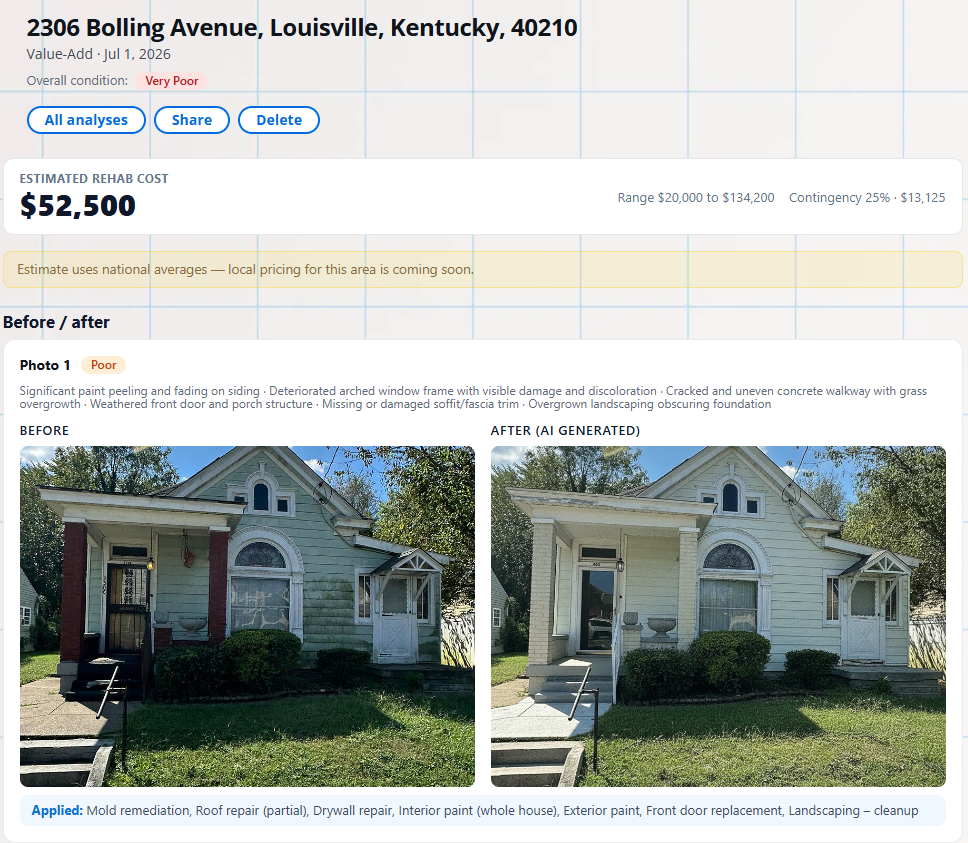
This is one of the most important strategy families in real estate. You buy a property that is underperforming, then improve it through renovations, better leasing, better management, or better presentation.
Best for:
- investors who can manage a business plan
- buyers who want more upside than a plain turnkey hold
Main risks:
- rehab overruns
- downtime
- overestimating post-improvement rent
How the report maps it: Value-Add
Commercial Value-Add
The same basic logic, but in office, retail, industrial, or mixed-use property. This often requires a different underwriting model than residential rentals.
Adaptive Reuse
Converting one use into another, like an old office or retail structure into housing or mixed use. Powerful, but much more advanced.
4. Recycle-Capital Strategies
These strategies are about getting money back out of the deal while keeping or growing the asset base.
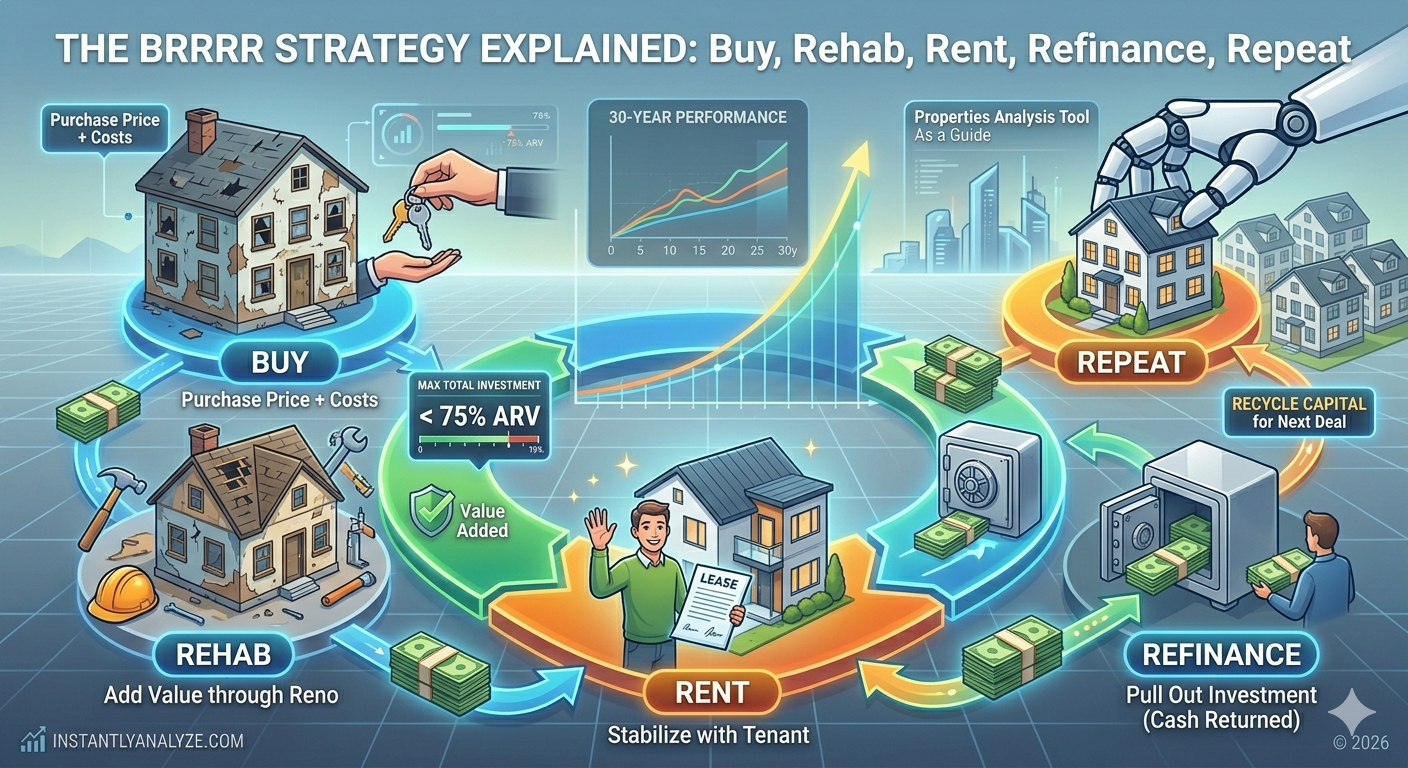
BRRRR
Buy, rehab, rent, refinance, repeat. You improve the property, stabilize it, then refinance based on the improved value to recover a portion of your original cash.
Best for:
- investors who want to scale
- operators who can manage rehab and lease-up
- buyers focused on capital efficiency
Main risks:
- after-repair value comes in low
- refinance terms get worse
- rent stabilization takes longer than expected
How the report maps it: BRRRR, Value-Add, Refinance
Refinance Optimization
Not every refinance is a BRRRR. Sometimes the strategy is simply to improve debt structure, lower payments, extend term, or do a cash-out refinance at the right moment.
Best for:
- investors already holding property
- operators managing rate or reserve pressure
How the report maps it: Refinance
5. Exit-Oriented Strategies
These strategies are driven by the sale event, not the long-term hold.
Traditional Flipping
Buy under market, renovate, sell for a profit.
Best for:
- operators who understand rehab and resale comps
- investors comfortable with project execution risk
Main risks:
- cost overruns
- longer holding periods
- resale market softness
How the report maps it: mostly Sale / Exit, sometimes Value-Add
Live-In Flip
Buy as an owner-occupant, improve the property while living there, then sell later. This can have financing and tax advantages, but it is a very different lifestyle choice.
Sale / Exit Planning
This is broader than flipping. Sometimes the right move is to buy, stabilize, then exit once the business plan is complete.
How the report maps it: Sale / Exit
6. Commercial Strategies
These are broader property-type strategies that often require underwriting models beyond small residential rentals.
- Retail Properties
- Industrial Properties
- Office Spaces
- Mixed-Use Developments
- Mobile Home Parks
- Self Storage
- Senior Living Communities
These are important to know about, but most beginner investors should not force themselves into these categories just because the upside sounds larger. The learning curve is real.
Free to use. No credit card needed. See cash flow, cap rate, and ROI in minutes.
Start Analyzing — Free7. Land And Development Strategies
These are some of the least beginner-friendly paths because they often depend on entitlement risk, future demand, and non-rental value creation.
- Land Banking
- Land Development
- Agricultural Land
- Ground-Up Development
These can absolutely make sense for the right operator. But they are usually a poor first strategy for someone still learning basic rental underwriting.
8. Arbitrage And Lease-Control Strategies
These strategies often control cash flow without owning the real estate the same way a standard rental investor does.
Rental Arbitrage
Lease a property, then re-rent it on a short-term basis if the lease and local rules allow it.
Lease Options
Control the property through a contract that may allow you to buy later.
These can work, but they are structurally different from owning a rental property. That is why they usually do not map cleanly into a standard rental property underwriting report.
9. Passive And Partnership Strategies
These strategies matter because many investors eventually move into them, but they are not the same as directly operating a rental property.
- Syndications
- Joint Ventures
- Real Estate Crowdfunding
- REIT Investing
These are excellent to understand if your goal is less day-to-day involvement. But they do not need to be your first move if you are trying to learn deal analysis from the ground up.
10. Debt And Distressed Strategies
These strategies focus on paper, liens, or distressed acquisitions rather than stabilized rental operations.
- Note Investing
- Tax Liens and Tax Deeds
- Foreclosure and Distressed Acquisitions
- Wholesaling
These can produce great outcomes in the right hands. They are also easy to underestimate because the risk is often hidden in legal process, title issues, timelines, or counterparties.
Active Vs Passive: A Better Beginner Filter
Instead of asking "Which strategy is best?" ask:
Do I want an active strategy or a passive one?
More Active
- house hacking
- long-term rentals you self-manage
- value-add
- BRRRR
- flips
- short-term rentals
More Passive
- professionally managed long-term rentals
- syndications
- REITs
- crowdfunding
If you want control, faster learning, and direct upside, active strategies teach you faster. If you want lower time demand, passive strategies may fit better, but they also give you less control over execution.
Which Strategies Are Most Beginner-Friendly?
For most new investors, the most reasonable order is:
- Long-Term Rentals
- House Hacking
- Light Value-Add
- BRRRR
- Short-Term or Niche Rentals
- Flips, land, commercial, passive structures, and specialty deals
That order is not universal, but it reflects a practical truth: the farther you move from a simple stabilized rental, the more assumptions and moving parts you need to get right.
How InstantlyAnalyze Uses Strategy In The Report
Inside the product, there is a difference between:
- broad educational strategy families
- actionable report presets
That distinction matters.
Your profile can store broader preferred strategies like:
- Long-Term Rentals
- House Hacking
- BRRRR Strategy
- Vacation Rentals
- Student Housing
- Commercial Value-Add
But the rental report still needs concrete, executable paths it can actually model. That is why the strategy workspace uses narrower report presets:
- Hold As-Is
- Value-Add
- BRRRR
- Refinance
- Sale / Exit
Those presets are not meant to replace the broader strategy taxonomy. They are the executable versions of it.
A Fast Way To Choose Your Starting Strategy
Ask yourself these five questions:
- How much cash do I actually have? Limited capital often pushes you toward house hacking, smaller long-term rentals, or carefully structured BRRRR deals.
- How much time do I want to spend operating the deal? If you hate management intensity, do not start with a strategy that depends on it.
- Am I optimizing for cash flow, equity growth, or capital recycling? That answer changes whether a hold, value-add, BRRRR, or exit path makes the most sense.
- How comfortable am I with construction and execution risk? If the answer is "not very," that should push you away from heavier value-add and flip strategies.
- Do I want to own real estate directly or just get exposure to it? That determines whether active ownership strategies or passive structures fit better.
Final Takeaway
Real estate investing is not one strategy. It is a collection of very different games with different capital needs, timelines, operational demands, and risk profiles.
For most beginners, the smartest move is not to chase the flashiest strategy. It is to choose the strategy you can actually execute well, then underwrite it honestly.
If you want a practical starting point:
- start with a plain hold model
- test a value-add version
- compare that against a BRRRR or refinance path if the deal supports it
- only move into more specialized strategies once you understand the baseline economics
That is exactly why the report starts with a handful of actionable presets and then connects them back to the broader strategy taxonomy. Education should widen your options, not confuse your decision-making.
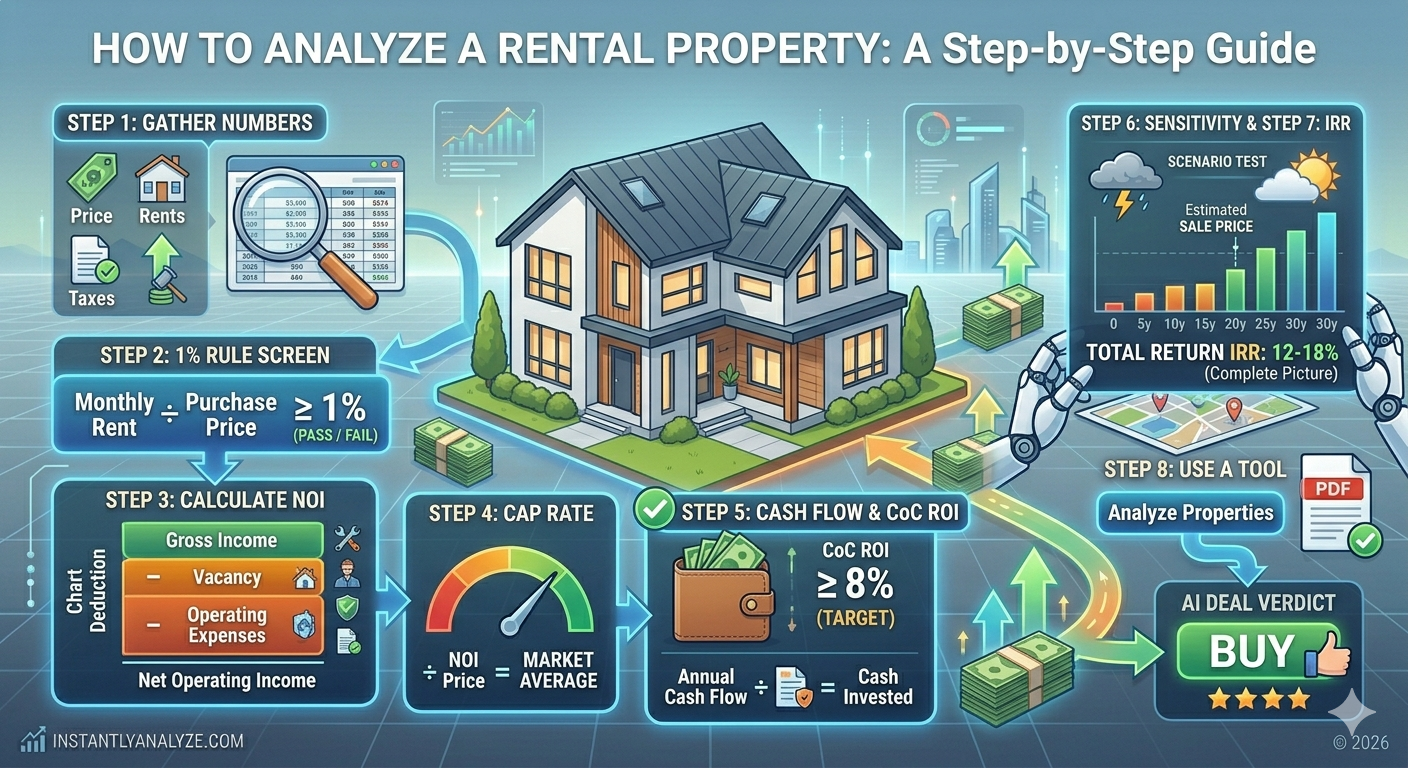
Ready to test the strategies on a real property? Use the Rental Property Analysis Tool to compare hold, value-add, BRRRR, refinance, and exit paths on the same deal.
Related reading: learn how to analyze a rental property, understand the BRRRR strategy, and get sharper with cash-on-cash return and IRR.