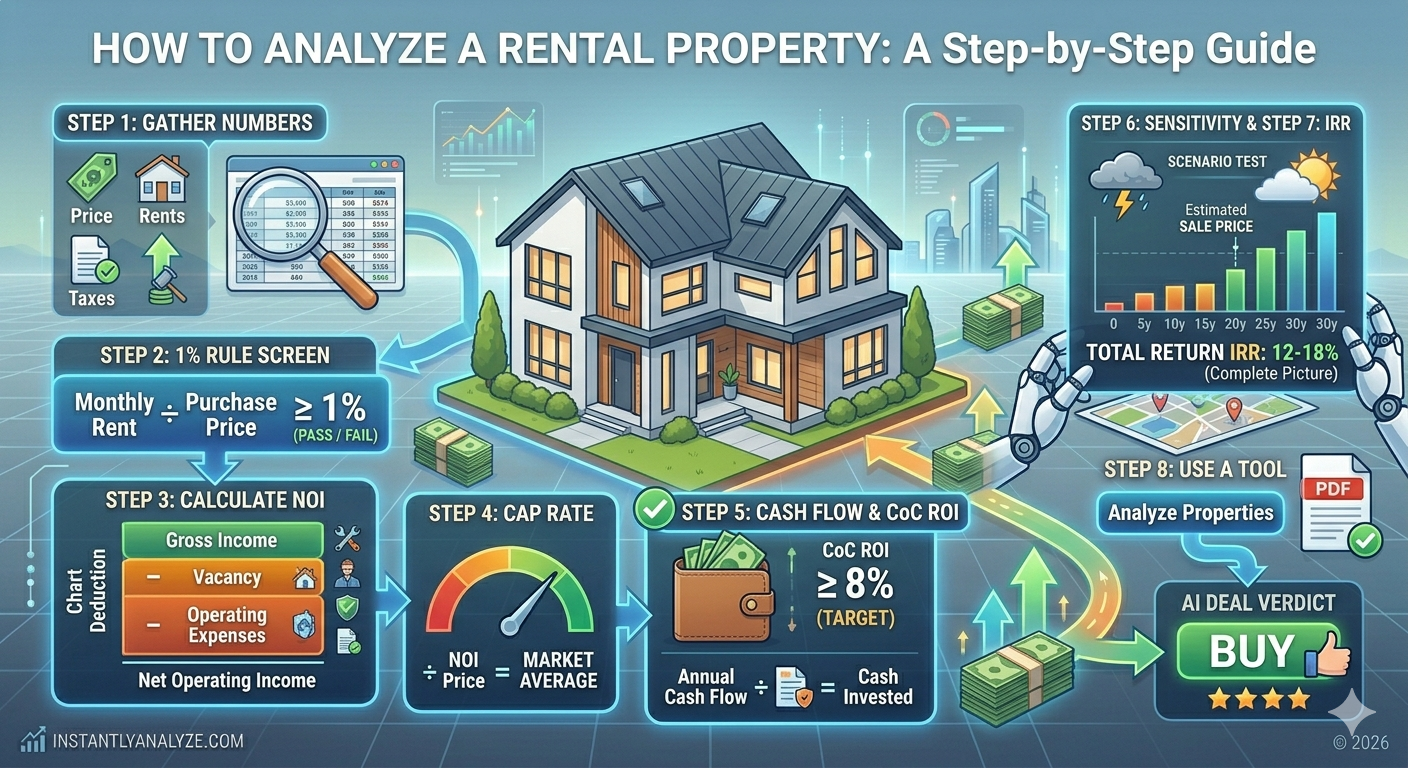
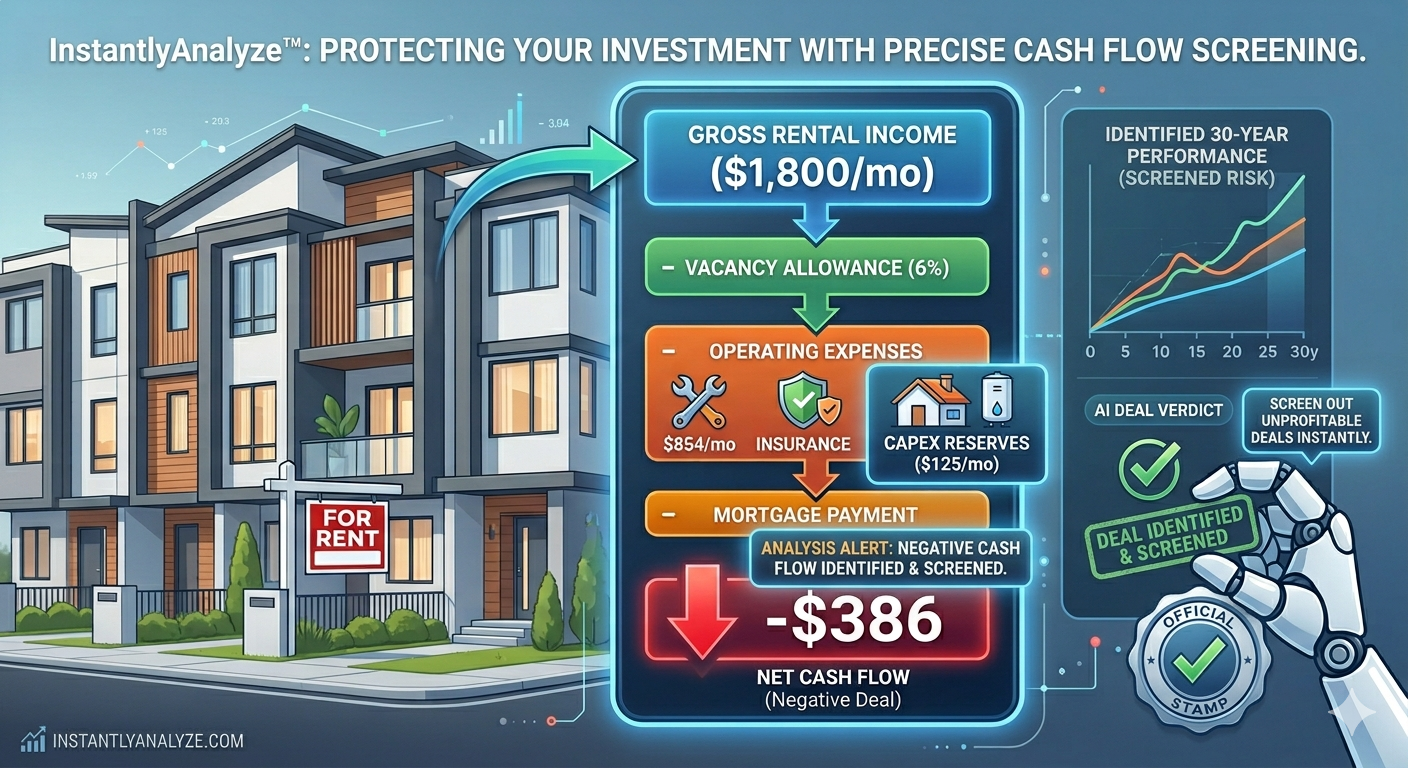
The 50% rule is a popular rule of thumb in real estate investing that helps investors quickly estimate a rental property's cash flow potential. While simple to apply, understanding when and how to use this rule effectively can significantly improve your property screening process.
Reality Check: The 50% rule is conservative by design. It's better to overestimate expenses and be pleasantly surprised than to underestimate and face cash flow problems.
What is the 50% Rule?
The 50% rule states that operating expenses for a rental property will typically consume about 50% of the gross rental income. This leaves the other 50% to cover mortgage payments and provide cash flow.
Formula:
Operating Expenses ≈ 50% of Gross Rental Income
Net Operating Income ≈ 50% of Gross Rental Income
Example:
- Monthly gross rent: $2,000
- Estimated operating expenses: $1,000 (50%)
- Net Operating Income: $1,000
- Available for debt service and cash flow: $1,000
50% Rule Calculator
Plug in rent and an estimated mortgage payment to see how the 50% rule frames operating expenses, NOI, and rough monthly cash flow before you do a full underwriting pass.
This is a fast screening estimate, not a final underwriting model. Verify taxes, insurance, repairs, vacancy, management, and financing terms before making an offer.
Run a full property analysis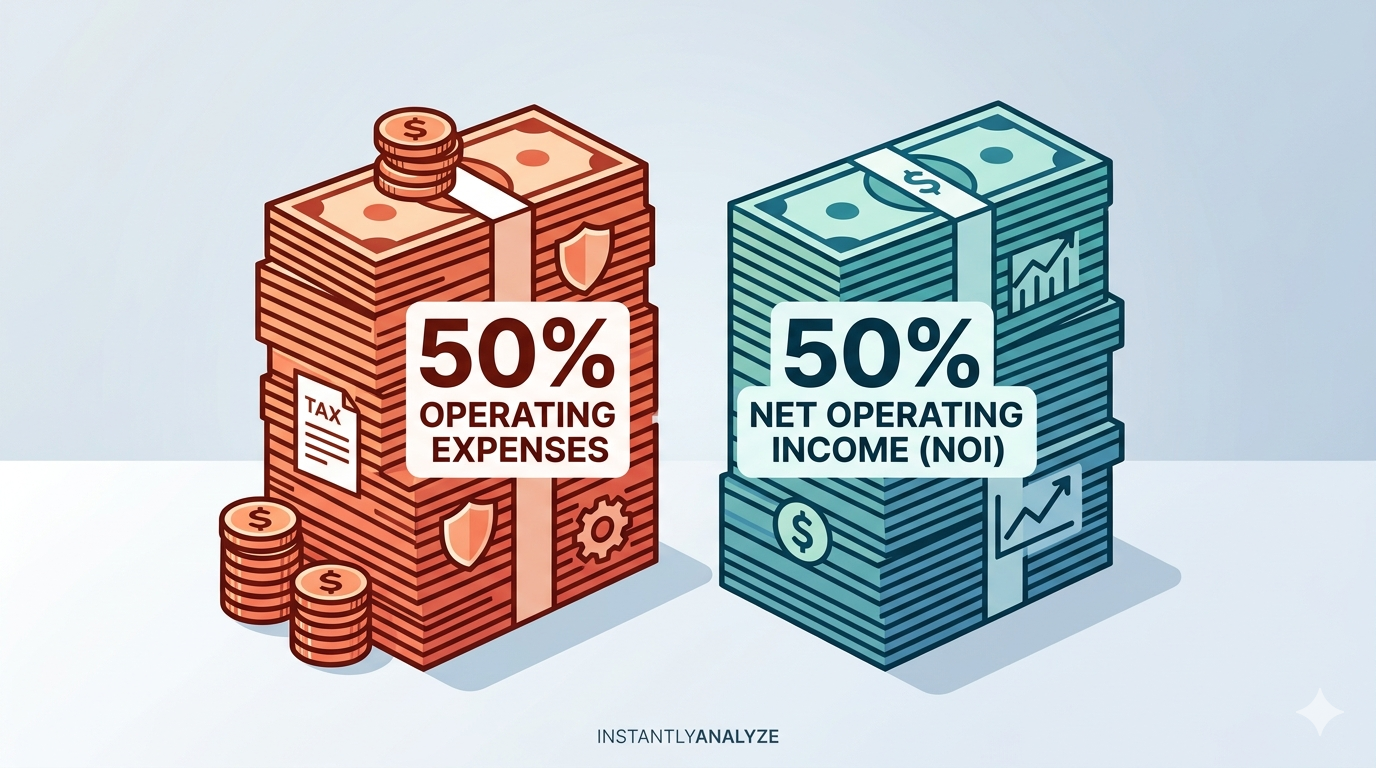
How the 50% Rule Works
The 50% typically covers property taxes, insurance, maintenance and repairs, property management fees, vacancy allowance, marketing, legal fees, utilities (if owner-paid), HOA fees, and capital expenditure reserves.
Why Investors Use the 50% Rule
Quick Screening Tool
Like the 1% rule, the 50% rule allows rapid evaluation of potential properties without detailed expense analysis.
Conservative Approach
By assuming higher expenses, the rule provides a safety margin that helps avoid unpleasant surprises.
Time Efficiency
Saves time during initial property screening by eliminating deals that won't work even with optimistic assumptions.
Combining the 50% Rule with Other Metrics
Use both the 1% rule and 50% rule together for comprehensive screening, and combine with cap rate analysis and cash-on-cash return calculations for complete investment analysis.
Ready to move beyond simple rules of thumb? Try our comprehensive Properties Analysis Tool to get detailed, market-specific expense analysis along with other crucial investment metrics.
Master more real estate investment analysis with our guides on cap rates, cash-on-cash returns, and the 1% rule to build your complete analytical toolkit.